Introduction
For Shopify store owners dealing in luxury goods, high-ticket items, or custom products, the question of how to display pricing is more nuanced than a simple number. The decision of price on enquiry vs show price Shopify stores face isn't just about transparency; it deeply impacts brand perception, customer experience, and ultimately, your sales conversion rates.
This article will explore the strategic advantages and disadvantages of both approaches in the context of price on enquiry vs show price Shopify. We’ll look at when each strategy is most effective, how it aligns with your brand’s goals, and how tools like Peekaboo Pricing can empower Shopify merchants to implement sophisticated pricing strategies tailored to their unique offerings.
The Transparent Approach: Showing Price Publicly
The most common approach in e-commerce is to display prices clearly on product pages. This offers immediate transparency and is what most online shoppers expect. For many businesses, it’s the default and often the most straightforward path to conversion.
Pros of Showing Price Publicly
- Instant Gratification: Customers see the price immediately, allowing for quick decision-making and impulse purchases. This reduces friction in the buying journey.
- Comparison Shopping: For products in competitive markets, displaying prices allows customers to easily compare your offerings against competitors, which can be an advantage if your pricing is competitive.
- SEO Benefits: Product pages with clear pricing can rank better for specific price-related search queries, drawing in ready-to-buy customers.
- Lower Friction: A straightforward path from product discovery to checkout typically leads to higher conversion rates for standard retail items. Shoppers don't need to take an extra step to get information they expect.
- Reduced Customer Service Load: Fewer "how much does it cost?" enquiries mean your customer service team can focus on more complex issues.
Cons of Showing Price Publicly
- Commodity Perception: For luxury or high-end products, a public price can sometimes make an item feel more like a commodity, potentially eroding its perceived exclusivity and value.
- No Lead Capture: You miss out on capturing valuable customer data (email, phone number) before they make a purchasing decision, hindering follow-up marketing efforts.
- Less Control Over Sales Process: Buyers are left to their own devices, meaning you can't intervene with a sales pitch, offer personalised recommendations, or address specific concerns before they buy or leave.
- MAP Compliance Issues: For authorised dealers, publicly displaying prices below a Minimum Advertised Price (MAP) can lead to penalties from suppliers.
When to Show Price Publicly
This approach is ideal for:
- Mass-Market Products: Items where price is a primary buying factor and competition is high.
- Everyday Goods: Products that don't require extensive consultation or customisation.
- Impulse Purchases: Items where immediate desire often outweighs detailed deliberation.
- Low-to-Mid Value Items: Where the risk for the buyer is minimal, and the purchase decision is quick.
The Strategic Approach: Price on Enquiry (Hidden Pricing)
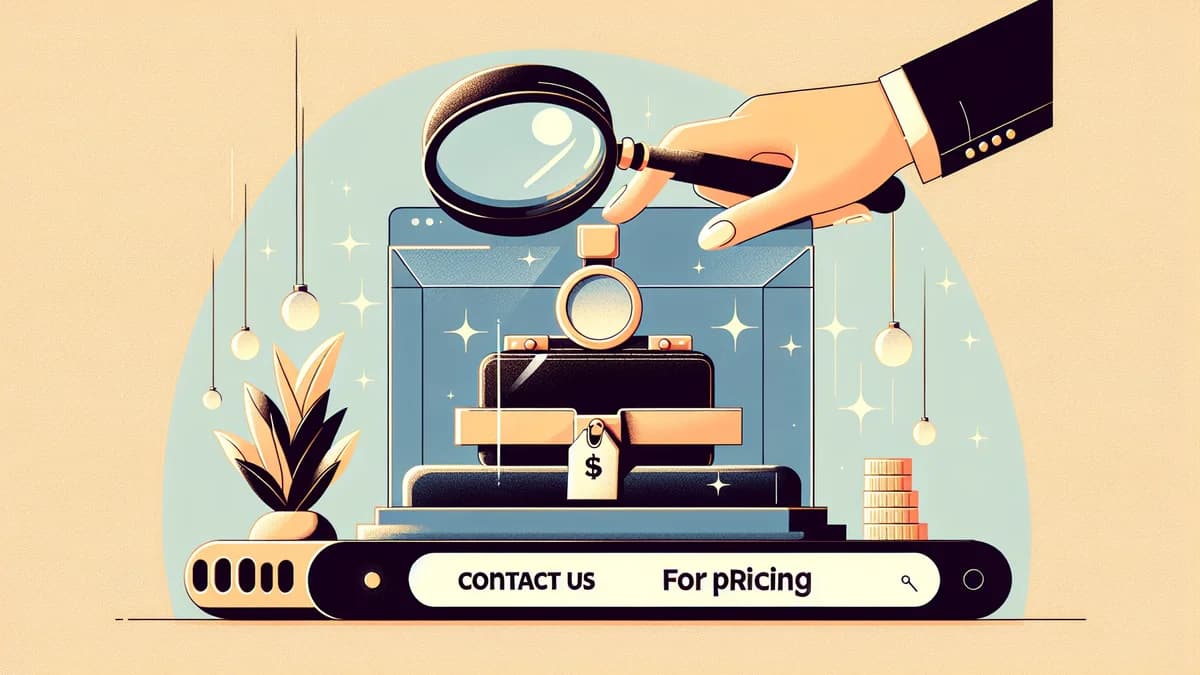
The "Price on Enquiry" model, sometimes referred to as hidden pricing or contact us for pricing, deliberately holds back the price on a product page. Instead, it invites the customer to take an action—typically filling out a form or contacting the store—to reveal the price. This strategy is particularly powerful for Shopify stores selling premium, customisable, or high-value items.
Pros of Price on Enquiry
- Lead Generation: Every enquiry is a potential lead. By requiring a form submission, you capture valuable contact information, allowing for targeted follow-up and nurturing. This is a primary benefit for high-value product pricing on Shopify.
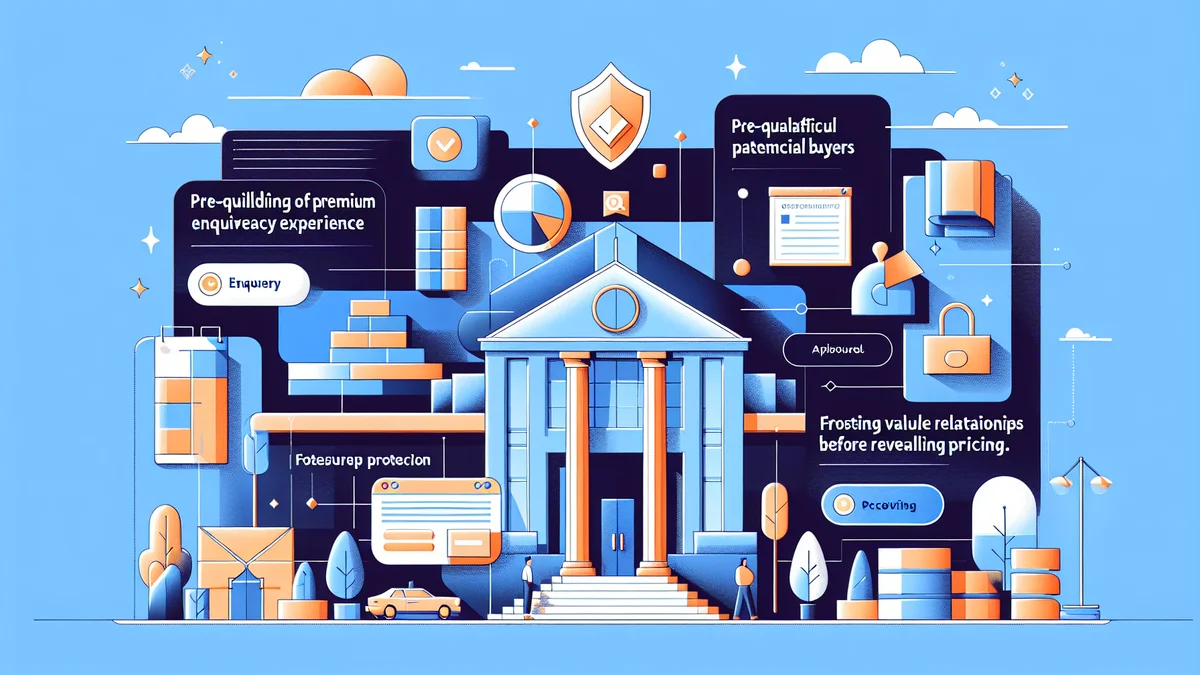
- Pre-Qualification: Customers who take the extra step to enquire are often more serious and genuinely interested. The act of enquiry acts as a natural filter, pre-qualifying leads for your sales team.
- Protecting Brand Perception: For luxury and premium brands, hidden pricing reinforces exclusivity and high value. It suggests that the product is so unique or bespoke that its price cannot simply be listed, elevating its status beyond a mere transaction. This is crucial for shopify luxury pricing.
- Control Over the Sales Cycle: Once an enquiry is made, you have an opportunity to engage directly. This allows you to educate the customer, highlight unique selling points, address objections, and build a relationship before the price is even revealed.
- Customisation Opportunities: For products that involve customisation, consultation, or variable pricing, "Price on Enquiry" is essential. It allows your team to understand specific needs before providing an accurate quote.
- MAP Compliance: For Shopify merchants bound by Minimum Advertised Price (MAP) agreements, hiding the price and requiring an enquiry is a compliant way to sell products without publicly violating supplier terms.
- Gathering Insights: Enquiry forms can be customised to ask specific questions, gathering crucial data about customer needs, preferences, and budget, which can inform future sales efforts and product development.
- Personalised Offers: With direct communication, you can tailor offers, bundles, or financing options that might not be visible to general site visitors, enhancing the customer experience and increasing conversion likelihood.
Cons of Price on Enquiry
- Increased Friction: Requiring an extra step can deter some casual browsers who are not willing to invest time upfront. This can lead to a higher bounce rate for less serious buyers.
- Slower Buying Process: The customer journey is extended, as it involves an enquiry, a response, and potentially further communication before a purchase can be made.
- Perceived Lack of Transparency: Some customers may view hidden pricing with suspicion or frustration, especially if they are accustomed to instant pricing.
- Resource Intensive: Managing enquiries, following up, and providing quotes requires a dedicated sales or customer service team, which might be a strain for smaller businesses without the right tools.
- Potential for Lost Sales: If the follow-up process is slow or inefficient, interested customers might move on to competitors who offer immediate pricing or a faster response.
When to Use Price on Enquiry
This approach is highly effective for:
- Luxury and High-Ticket Items: Products where the purchase is a significant investment and requires careful consideration, often involving a sales consultation. This is core to premium brand pricing on Shopify.
- Custom or Bespoke Products: Items that are unique to each customer and require specific details before a price can be determined (e.g., custom furniture, tailored suits, unique art).
- B2B Wholesale: Business-to-business transactions often involve negotiated pricing, bulk discounts, or specific contract terms that necessitate direct communication. Shopify contact us for pricing is common here.
- MAP-Restricted Products: When supplier agreements prohibit displaying prices below a certain threshold.
- In-Store Only Products: Items that for various reasons are not sold online and require a physical visit or consultation.
- Services Requiring Consultation: When a service is linked to a product (e.g., installation, design, consultation) and its cost varies by project.
Implementing Price on Enquiry with Peekaboo Pricing for Shopify
For Shopify merchants looking to leverage "Price on Enquiry" effectively, apps like Peekaboo Pricing provide a robust solution. Peekaboo Pricing allows you to selectively hide prices on specific products and replace them with custom content, enquiry forms, or calls-to-action.
- Flexible Hide Price Types: Create unlimited "hide price types" for different scenarios. For example, a "Luxury Product Enquiry" type could have specific form fields, while an "In-Store Only" type might just display a message and a link to your store locator.
- Automated Lead Conversion with Reveal Links: A unique feature of Peekaboo Pricing is its optional time-limited "reveal links." When enabled for a hide price type, customers who submit an enquiry form immediately receive an email with a secure link that temporarily unlocks the product price on your site. This allows them to purchase at their convenience, turning enquiries into sales without manual follow-up.
- Reliable Lead Capture: Peekaboo ensures no lead is lost, with automatic email retry, failover systems, and Slack alerts for merchants, providing peace of mind that every enquiry is received.
- Automated Product Assignment: Manage hundreds or thousands of products effortlessly using flexible "assignment rules." You can automatically apply "hide price types" based on product tags, vendor, type, collection, price range, or even customer login status (e.g., for B2B wholesale pricing). This is key for high value product pricing on Shopify where different segments have different needs.
- Content-Only Options: For products not sold online (e.g., "Visit our Showroom for Pricing"), you can use a "content-only" hide price type that displays a message and a button linking to a store locator or contact page, driving foot traffic without generating unnecessary enquiries.
- Login-Gated Pricing: Use the "Login Required" hide price type with assignment rules to gate prices behind a customer login, perfect for B2B or members-only pricing.
Factors to Consider for Price on Enquiry vs Show Price Shopify
The best approach isn't a one-size-fits-all solution. Consider these factors:
- Your Product Offering: Is it a commodity, a custom piece, or a high-end luxury item? The more bespoke or exclusive the item, the more "Price on Enquiry" makes sense.
- Your Target Audience: Are they impulse buyers, or do they typically conduct extensive research and expect personalised service? Luxury buyers often appreciate a more curated experience.
- Your Brand Positioning: Do you want to be seen as accessible and transparent, or exclusive and premium? Your pricing display directly communicates this.
- Your Sales and Marketing Resources: Do you have the team capacity to handle enquiries, follow up, and nurture leads effectively? If not, transparent pricing might be less taxing, though less strategic. Tools like Peekaboo can help automate parts of this process, reducing the burden.
- Industry and Supplier Requirements: Are there any MAP policies or industry standards that dictate how you display prices?
Hybrid Approaches and Advanced Strategies
Many successful Shopify stores don't stick to just one method. A hybrid approach often yields the best results:
- Segmented Pricing: Show prices for standard, lower-value items while using "Price on Enquiry" for your premium, high-ticket, or customisable products. Peekaboo Pricing's assignment rules make this easy to manage across your catalog.
- Login-Gated Pricing: Offer public prices for general customers but require login (and potentially a "Price on Enquiry" for further details) for wholesale or VIP customers.
- Dynamic Messaging: Use content-only hide price types for products that are temporarily out of stock or require special ordering, providing customers with information rather than just a hidden price.
For example, an electronics dealer might show prices for everyday accessories but use Peekaboo Pricing to hide prices on high-end televisions from brands with MAP policies. Customers submit a form, receive a time-limited reveal link, and can purchase directly, ensuring compliance while converting leads. A custom furniture store, conversely, might use an "enquiry-only" type, capturing detailed project requirements and following up with a personalised quote, as their products are truly custom and require human interaction for accurate pricing.
Making the Right Choice for Your Shopify Store
Ultimately, the choice between "Price on Enquiry" and showing prices publicly depends on your business model, product value, and strategic goals. For Shopify luxury pricing, high-value product pricing on Shopify, and premium brand pricing on Shopify, making the right decision on price on enquiry vs show price Shopify offers distinct advantages in lead generation, brand perception, and sales control.
It allows you to transform a simple price display into a powerful sales and marketing tool, building relationships and pre-qualifying buyers before they even see the cost. By strategically implementing hidden pricing, especially with the automation and conversion features offered by solutions like Peekaboo Pricing, you can enhance your brand's exclusivity, streamline your sales process, and drive more profitable conversions.
Consider your products, your customers, and your desired brand image. Don't be afraid to experiment and optimise your approach. The right pricing strategy isn't just about the number; it's about the entire customer journey and the value you communicate.
Related Articles
Continue your learning with these related resources:
- When and Why to Hide Prices on Your Shopify Store: A Strategic Guide (Comprehensive Guide)
- Automate Shopify B2B Pricing: Vendor-Based Rules for Seamless Wholesale
- How to Stay MAP-Compliant as an Authorised Shopify Dealer
- Setting Up MAP-Compliant Price Hiding on Your Shopify Store
- The Psychology Behind "Contact Us for Pricing" on High-End Products
- Empowering B2B Buyers: Giving Time for Internal Sign-Off Before Purchase on Shopify
Conclusion
Deciding between "Price on Enquiry" and showing prices is a pivotal strategic decision for Shopify merchants, particularly those in the luxury and high-value product sectors. While transparent pricing offers immediate clarity and reduces friction, "Price on Enquiry" excels at lead generation, brand reinforcement, and creating a controlled sales environment. By carefully considering your product, audience, and brand goals, you can choose the approach that best elevates your offerings and drives sales. Tools like Peekaboo Pricing provide the flexibility and automation needed to implement sophisticated hidden pricing strategies, turning enquiries into valuable customer relationships and successful conversions.